
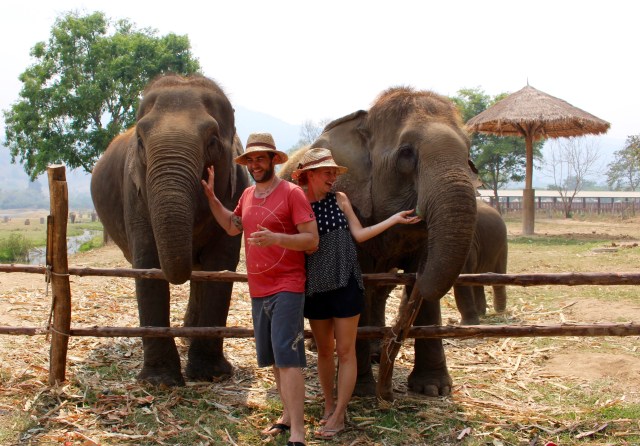
I love elephants. Always have, since back in the late 80’s when they had a pair tucked away on the backside of the Henry Doorly Zoo. Emotionally intelligent and capable of rich social lives, elephants organize themselves into familial structures (led by a matriarch, woo!) to which they stay loyal their whole lives. They team up to protect newborns; they mourn their dead; they recognize old friends. Mothers designate a godmother to help care for her offspring and take over should she die before her baby is mature enough to take care of itself. I could nerd out on elephants all day, the more I learn – I can’t help it.
It breaks my heart to see elephants exploited for human entertainment. Sadly, much of this mistreatment is a direct product of the fascination people have with the animals. Most of the elephants you see performing at the circus, giving rides, or marching in a parade were separated from their mother at a young age and forced to endure a tortuous domestication training specifically designed to crush their spirit (google: Phajaan). This is why places like the Elephant Nature Park are so special. The park allows animal lovers the opportunity to get up close using an ethical, kind approach, and teaches us how to contribute positively to the welfare of this endangered species.
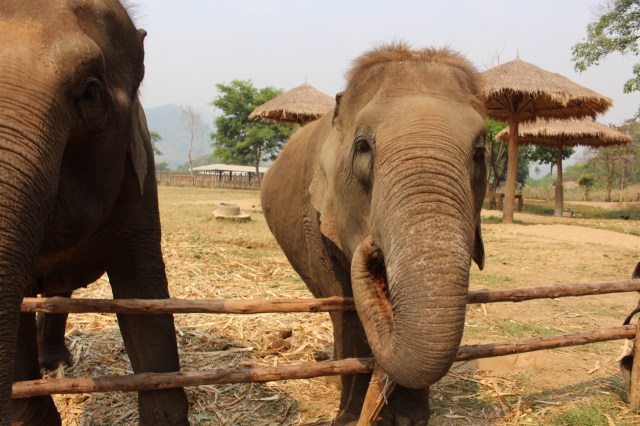
ENP rescues abused, traumatized, sick, old, or otherwise exploited elephants by basically buying them out of their current situation. Every elephant has a story, some are absolutely heartbreaking (check out Jokia’s story – gahh), others are more, eh, bureaucratic. The park is supported by the income it makes from daily visitors, tours, and week-long volunteer opportunities, plus direct donations from Save Elephant Foundation and the Serengeti Foundation (a 501(c)(3) for US donors), and, most importantly, by getting the word out (more on this below).

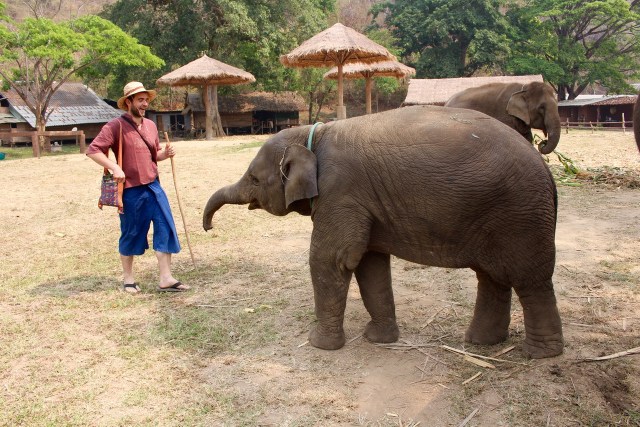
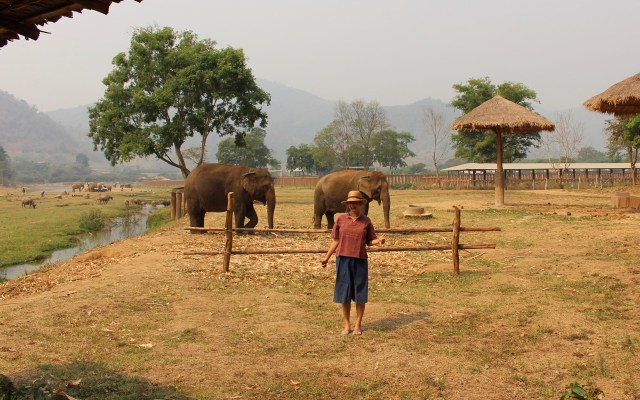
Aleksiy and I hit the jackpot the day we visited; not only did we have a great guide (Ice), but miraculously we were the only 2 people signed up for our tour. We got to spend all day with 3 elephants: Maateaw (Little Bush), an 18 month old male, Pumnoiu (Big Bush), his 30-year old mom, and Teangmo (Watermelon), his pregnant godmother.
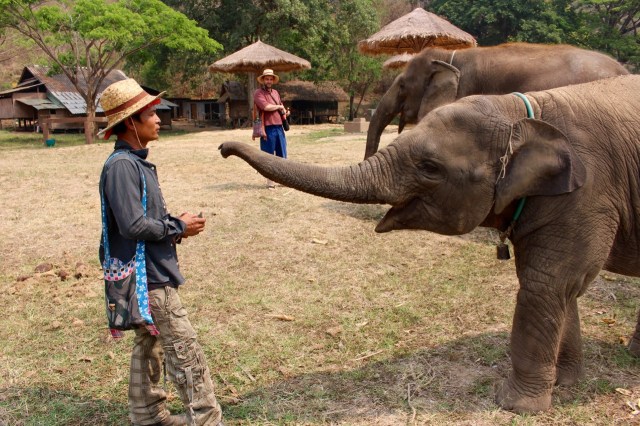
Arriving at the park had me feeling like I was in Jurassic Park. The bumpy back road opened up to a river valley dotted by small herds of elephants, free ranging all over the valley. I was awestruck and could not wait to get closer. When we got out of the van and I realized we’d be spending the day with a baby elephant, I nearly had to put my head between my knees. We changed into loaner clothes and set off to meet our crew.
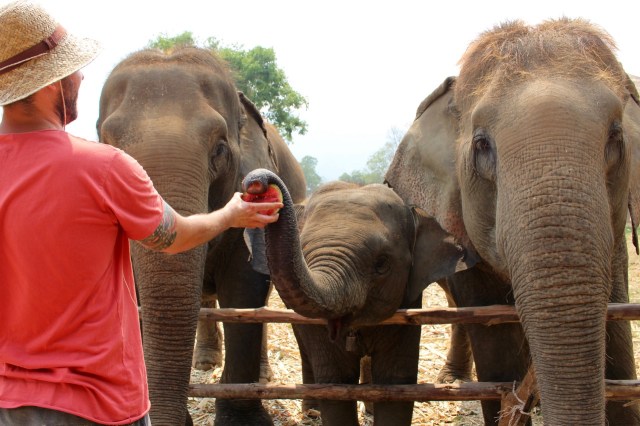
Our introduction to Big Bush, Little Bush, & Watermelon began by feeding them large laundry baskets full of fruit (positive conditioning). Ice warned us that Little Bush could be naughty, and to be a bit careful around him. This worried me, but I quickly saw what he meant – rather than waiting for Aleksiy and I to offer him fruit, he started diving face first into the basket, totally unaware of his size/strength and our personal space/balance. We quickly gave up and offered him the whole thing, it was funny to watch him dump it out and sloppily go for it, almost like a human toddler would’ve. The older girls were much more patient and gentle, the dexterity with which they accepted the fruit and curled it into their mouths was impressive. When the baskets were empty they gently searched our hands and pockets, confirming with their trunks that all the fruit was gone.


After their snack we took them on a hike up the side of the valley. The herd rolled around in some mud to cool themselves off in preparation for the walk. Our hike lasted about 2 hours with a stop for lunch, and the elephants kept their mahouts busy by wandering off and making their own path. I quickly understood why Little Bush had a cowbell on. The gentle giants were so sweet and Little Bush continued to demonstrate his playful spirit and carefree lack of boundaries.
When we returned to the valley it was time to give the herd a rinse –giving us all a much-needed break from the heat. They loved the water – Watermelon laid down and rolled over, allowing us to wash chunks of mud off her back. Little Bush would disappear completely, using his trunk as a snorkel, swing it around like a helicopter, and slap the water it with it, splashing us. They reminded me of big happy dogs, so playful and good-natured.
After the rinse we changed back into our normal clothes and got to feed them one more time. Little Bush allowed himself to be handfed this time, but insisted that we peel his bananas or he’d throw them on the ground. If we weren’t moving fast enough he’d go straight to the source. Goofball!

The more time we spent with our elephants, the more their personalities shone through. I fell in love with their big eyes and long eyelashes, the happy wagging of their ears and the friendly touch of their trunks.
After the feeding we said our goodbyes and Ice gave us a tour of the rest of the facility. We met several other groups of elephants, scars of their past abuse clearly visible. We met an elephant that was blinded on purpose by an angry mahout. We met one elephant that was crippled by an illegal logging accident, another that had part of it’s leg blown off by a landmine. Several had scars and holes in their ears from the hooks their previous mahouts used. It was sad, but I just kept reminding myself that these elephants got their happy ending.


There are only about 30,000 Asian elephants left on the planet, and of those, approximately 20% are in captivity. Without our help, they will be extinct within our lifetime. Here are some ways you can help the Elephant Nature Park on their mission, taken from their website:
- Visit the park, or tell your family and friends that they are welcome to visit our website and park., or sign up as a volunteer.
- Follow us, Tweet and share our activities on our social network community.
- Donate direct to Save Elephant Foundation
- Serengeti Foundation has helped Elephant Nature Park since our inception. US residents may click to donate here and claim 501(c) tax relief.
- Let people at home know that there are only 30,000 Asian Elephants left on the planet. (Imagine this in human terms, as under a third of a sports stadium crowd)
- Do not support elephant poachers by buying ivory or skin products whether allegedly legally obtained or not . Demand causes death to these innocent creatures.
- Write a story for your local newspapers describing the plight of the elephant and how we can all assist in their survival
- Order something from theSave Elephant Foundation online shop – all proceeds help.
- Sponsor an Animal at our park and beyond
- Help fulfill our wish list
- Become an Elephant Ambassador
 Tales of a Southeast Asian Invasion