

Towards the end of our trek, I asked Ma le how much further (her answer was “1 hour”, every time) and she pointed to a shiny little triangle between two mountains and told me it was the lake. I figured something had gotten lost in translation, because what she was pointing at certainly wasn’t water. It was shiny and it glimmered like the tin roofs of the villager’s houses – I thought maybe she was pointing out our final destination, a village near the lake.


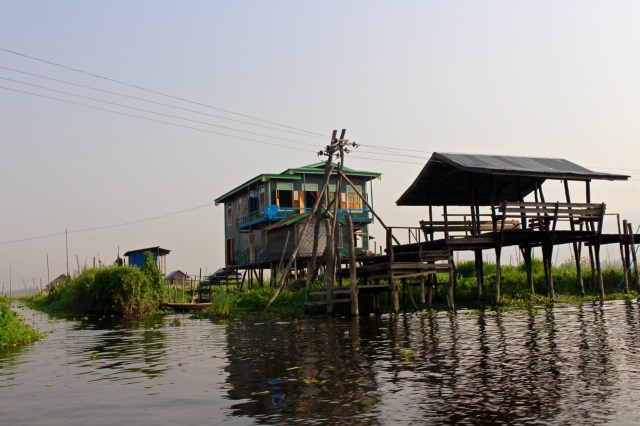
As we got closer, I realized that Ma le WAS pointing at Inle Lake, and that the shiny glimmering rooftops were the roofs of houses built on the water, on stilts over the lake. After a final meal with our trek group, Ma le loaded us into a canoe-like motor boat and we zoomed north, to the village of Nyaung Shwe, where we would stay during our time at Inle.
Inle Lake is a unique place. The lake itself is not very deep (average depth is only like 7 feet) and it’s clarity and fertile surroundings have encouraged villages to form and subsist upon the lake. Most of the villagers that inhabit the lake live in the stilt houses and have developed plots of floating gardens near their abodes. Fishing is also a source of income for the locals, as well as handicrafts like traditional textile weaving, ornamental carvings, and now, tourism. Most tourists stay in Nyaung Shwe, a city just north of the lake, easily accessible by boat. Accommodation on the lake itself is limited, expensive and isolating.


I got to learn a lot more about life on the lake during a boat tour I took with Canelle and Wes, a friendly Canadian fellow we met in town. Luckily, Canelle had done her homework and knew what ask for when we were negotiating the itinerary with our boat guide. Apparently, there are several “fake” markets and unethical activities on the lake that exist for the sole purpose of tourists’ entertainment. For example, you can visit a “long-necked woman village” which is essentially a prop town where rural women of the Kayan tribe are on display for your viewing pleasure and a small entrance fee. The saddest part about it, is that the women don’t even live nearby so they are essentially taken from their village and stuck in a human zoo until they’ve made enough money to go back home. Skip that.

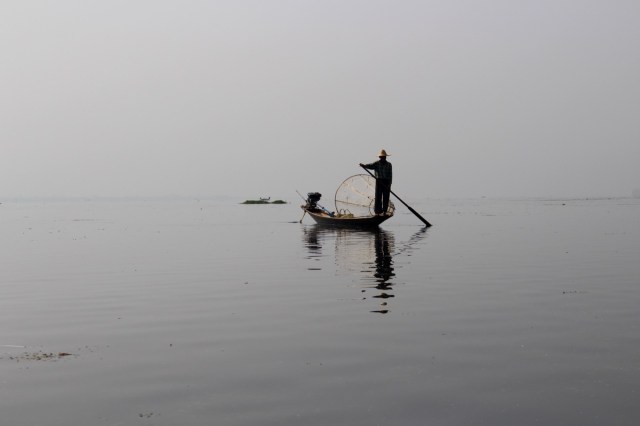
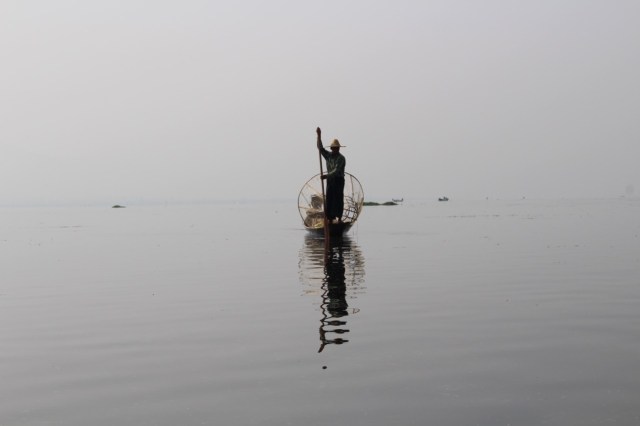
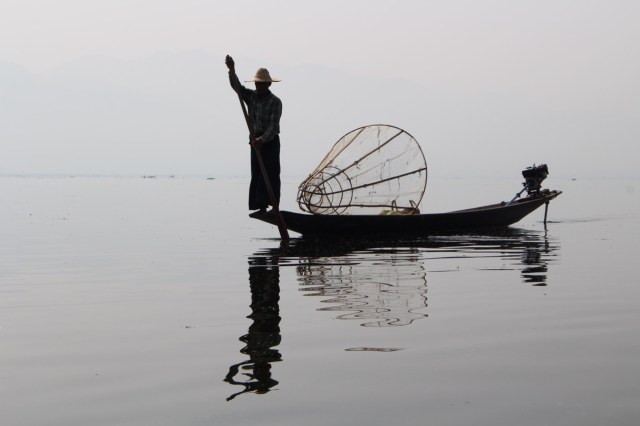
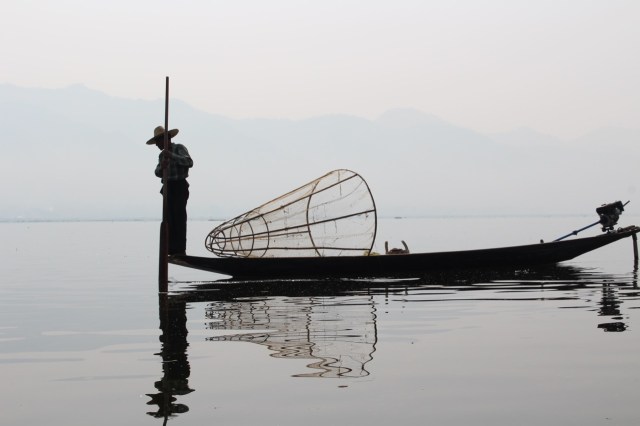
We set out early to watch the gorgeous process that is Inle’s traditional fishing methods, zooming past “fake fisherman” that dress the part and take tips for photos. The real deal is a mesmerizing sight– fisherman stand on the very tip of their canoe-like boats and paddle with one leg wrapped around an oar, while they slowly lower a basket into the water and trap the fish.


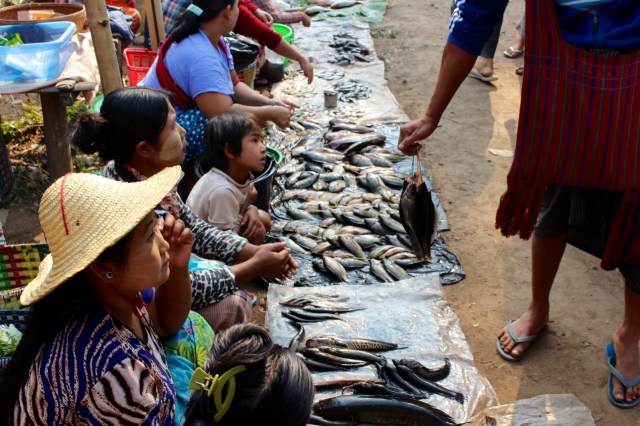
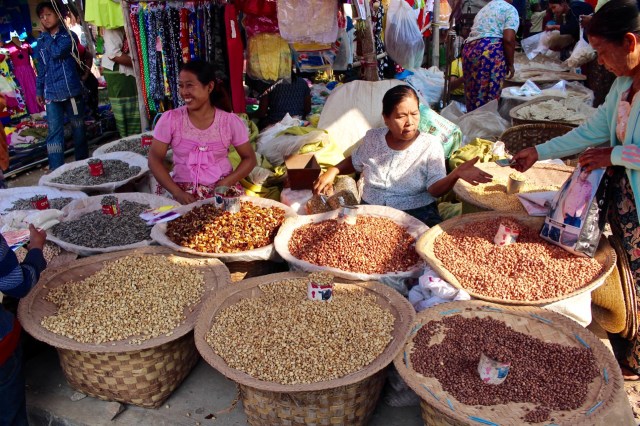
After excessive documentation of the fishing process, we moved on to the local market, which mostly featured food. You can tell pretty quickly if a market is genuine or not by the wares offered for sale. Some markets are full of tourist crap, which you begin to recognize very quickly because it’s for sale on every corner. Others, like this one, cater to the locals and are so much more interesting.

After the market, our next stop was Tharkong Pagoda. The ride to the pagoda was harrowing- weaving through curvy canals in our 30ft boat, playing chicken with other boats while trying to thread the needle through the rudimentary canal locks. The first couple of times I was ass-clench terrified, after a couple successful passes I began to enjoy the rush – funny how that works.


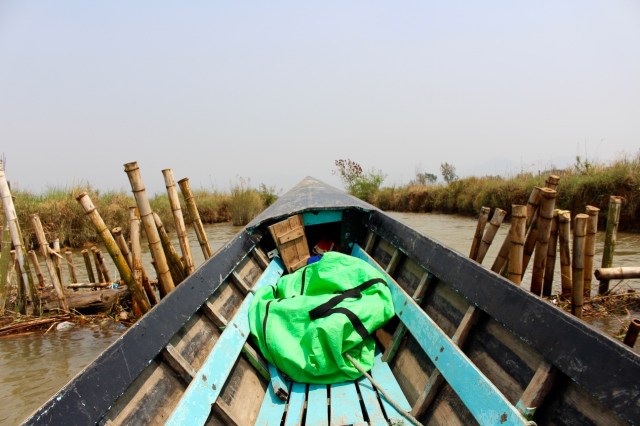
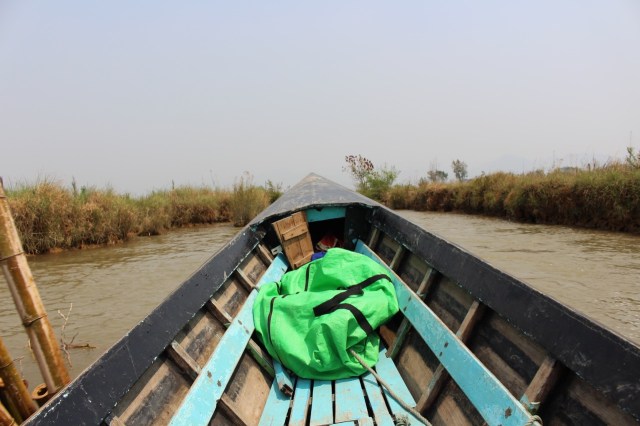
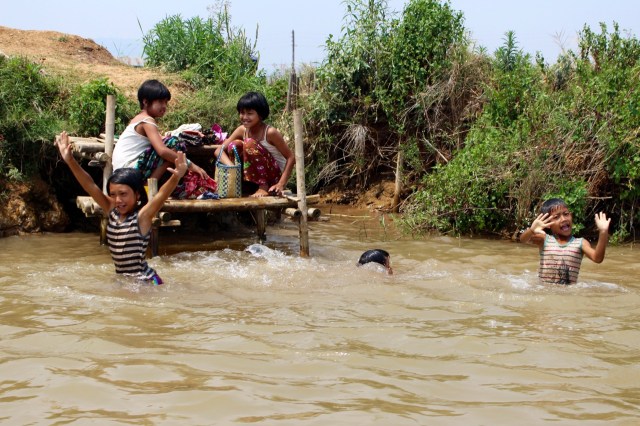
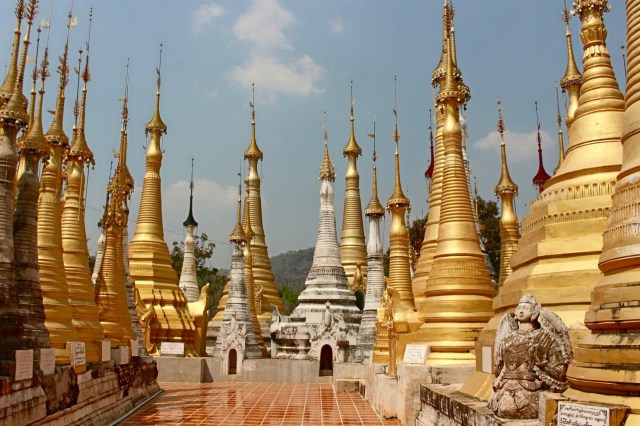
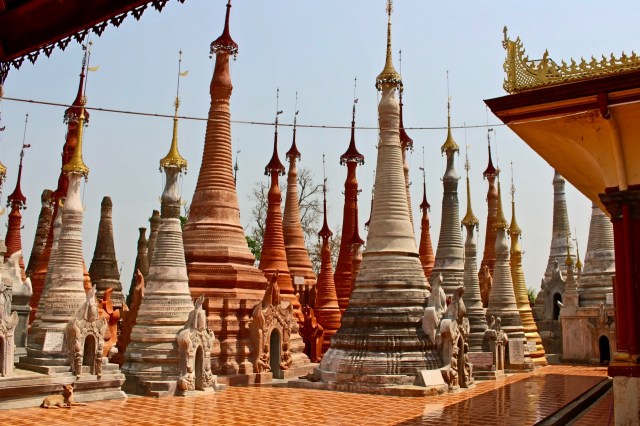
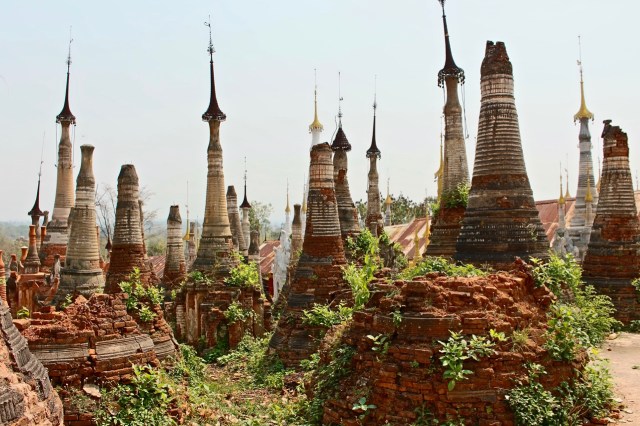
The entrance to the pagoda was a long hallway lined with hand-made items for sale: sand paintings, textiles, purses, wooden masks, puppets, etc. The walkway was so long we thought perhaps we weren’t headed in the right direction. The pagoda itself was immemorable, but the stupas surrounding the site were fun to explore. All in various states of restoration, it was like a mini Bagan. One can sponsor the restoration of a stupa; it was fun to search around for the English ones (there were only 2 or 3, most looked Burmese or Thai, but we did see some Chinese and Russian)

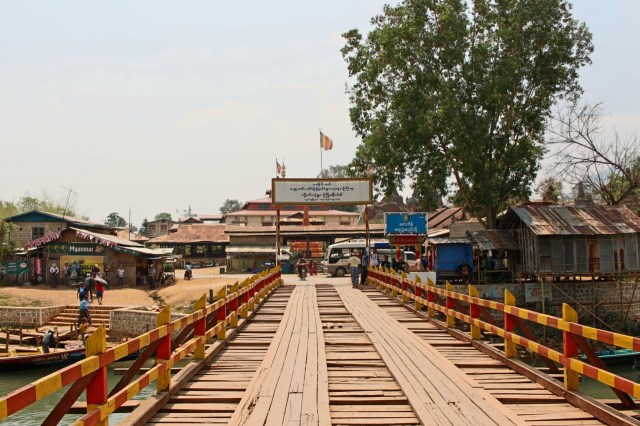





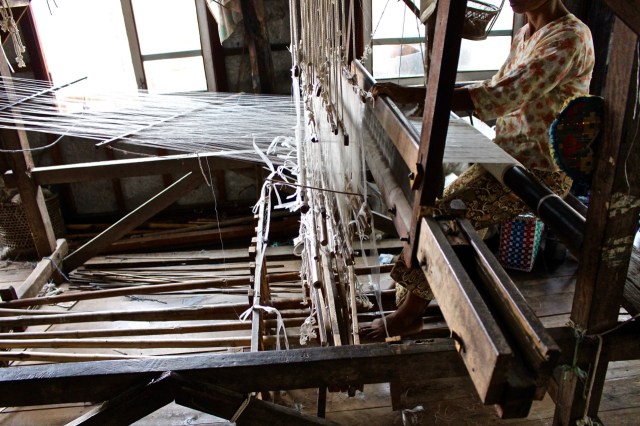
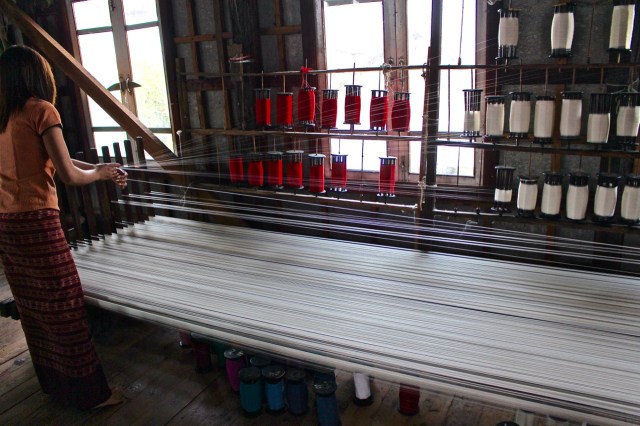
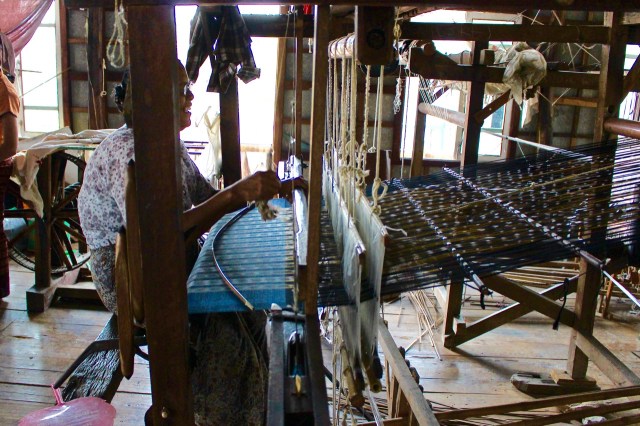
Our next stop was a textile factory. It was fascinating to see where lotus silk comes from – break a lotus twig in half and the gooey fibers are strong enough to be woven together to create thread. End product is incredibly soft (but v. expensive). We watched the women weave intricate patterns by hand, in awe of how quickly they were moving regardless of the tediousness of the process. They looked like they were playing an organ of wood and thread, with lots of pedals at their feet and strings of thread at their fingertips. As they pedaled, the big wooden bobbin clacked back and forth across the length of the loom, giving the warm room full of moving parts a rather hypnotizing quality.
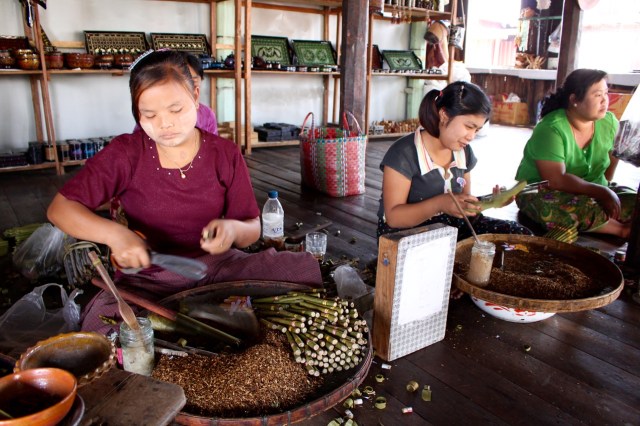
After a lackluster lunch on the lake, we moved onto a little shop where women were hand-rolling mini cigars- called cheroots. There are many different variations of a cheroot, but here you had a choice between sweet and full flavor. The sweet tobacco was delicious – flavored with honey, tamarind, brown sugar, banana, alcohol, salt, star anise & fennel seeds, it tasted similar to a clove cigarette.
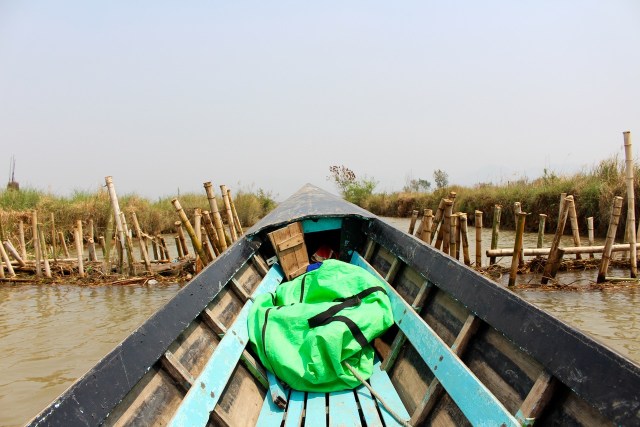
Our last stop on the way back to Nyaung Shwe was a drive-by of the floating gardens – a large community vegetable garden on the lake. We had previously seen farmers filling their boats to the brink with lake-bottom weeds, I figured it’s nutrient rich properties make great fertilizer. Here, our boat guide explained that the weeds are used to form the floating garden beds, anchored in place by bamboo poles. The gardens are able to rise and fall with the water level, totally resistant to flood and drought. Depending on the season, they can grow tomatoes, cucumbers, squash and eggplant, plus an assortment of beans and lentils.


We probably (Aleksiy would say definitely) allocated too much time for our visit to Inle, as there’s not much to do there aside from exploring the lake, which you can really do in 1 day. That said, Canelle, Aleksiy and I did ride bicycles to a nearby vineyard for a sunset wine tasting on the patio. Although the wine was a joke, the views and company were great – all in all a lovely time in Inle Lake.

 Tales of a Southeast Asian Invasion